
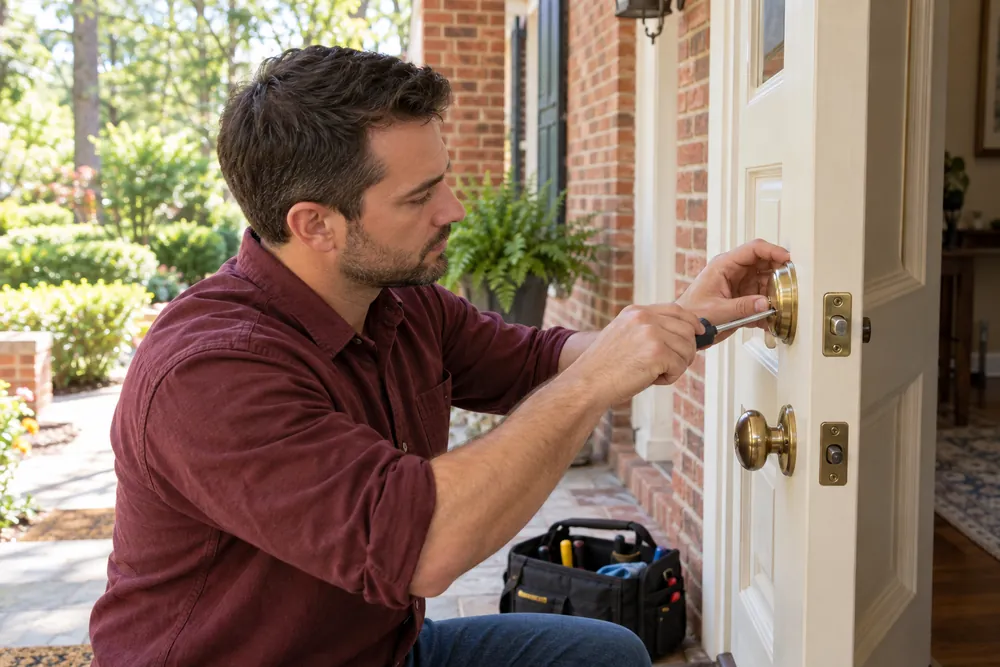
Notice when the problem happens
Does the key turn easily with the door open but resist when it is closed? Does the handle feel loose, or does the latch fail to return? These observations are more useful than guessing which part to order. Stop forcing a bent key or a mechanism that feels close to breaking.
The door and lock work together
A cylinder, latch, strike and door alignment all affect normal locking. A symptom can come from the hardware, the door fit or a combination. Ask for an assessment of the whole affected entrance before choosing a replacement. Explain any recent change, such as work on the door or a problem that has become more frequent.
Older hardware and replacement choices
Some older entrances use fittings that differ from current standard sets. Say whether appearance or retaining the original preparation is important. Ask about parts availability, fit and the proposed scope. Repair may be suitable in one case; damaged or incompatible hardware may make replacement the better discussion in another.
Test normal use before finishing
Check the door through a full opening, closing and locking cycle. Test each supplied or retained key and ask what changed. If additional work is proposed after inspection, confirm the revised estimate before it starts. Keep a description of the repair and any agreed follow-up terms with the invoice.